Translating a complex water-infrastructure challenge into a problem of engineering, affordability, resilience, redevelopment and public trust.
Combined sewer systems carry sewage and stormwater through the same network. During heavy rainfall, system capacity can be overwhelmed, creating overflows into waterways and backups into streets and other public spaces. Long Term Control Plans are therefore not simply engineering documents: they establish how communities will reduce overflows while confronting major capital costs and long implementation horizons.
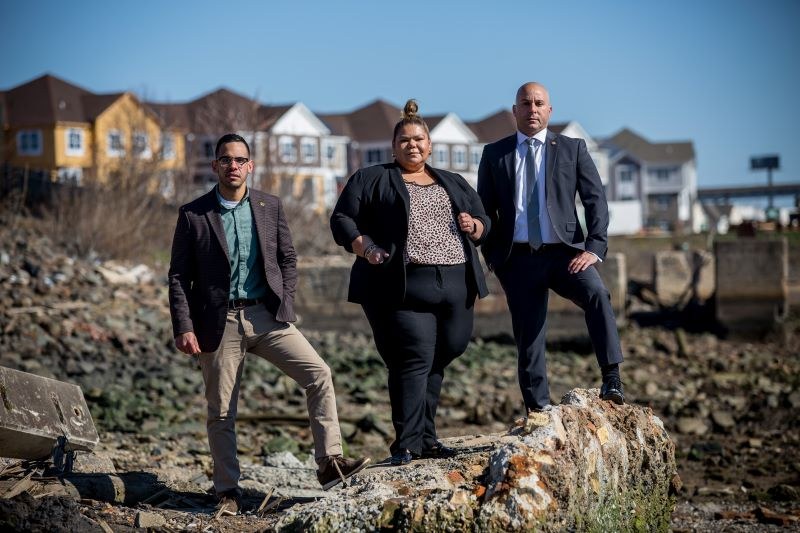
Jersey Water Works identified Joel Rosa, then Chairman of the Perth Amboy Redevelopment Agency, as Perth Amboy's lead person on the City's CSO Long Term Control Plan. Its public profile also described his role connecting redevelopment with infrastructure improvements that support storm resiliency.
This placed the work at an intersection: technical planning had to be understood alongside municipal priorities, economic development, affordability, environmental outcomes and community concerns.
System capacity, treatment alternatives, green and gray infrastructure, constructability and long-term performance.
NJDEP requirements, municipal governance, permitting, implementation obligations and public accountability.
Flooding, water quality, neighborhood effects, meaningful participation and the lived consequences of infrastructure decisions.
Capital investment, financing, ratepayer burden, redevelopment, alternative solutions and long-term fiscal sustainability.
The leadership challenge was not choosing one perspective. It was creating a process in which all four could inform the decision.
Jersey Water Works reported that Rosa worked with multiple partners to help shape Perth Amboy's Long Term Control Plan and highlighted his view that strong solutions emerge through community collaboration. That approach aligns with the broader LTCP framework: cost-effective solutions, environmental benefit, community benefit and meaningful stakeholder participation all matter.
When concerns emerged about cost and alternatives, external watershed advocates addressed Rosa and NJDEP directly in support of a value-engineering session to examine lower-cost options. The episode demonstrates the practical tension at the center of public infrastructure work: compliance and environmental performance must be reconciled with affordability and implementation reality.
Infrastructure Strategy · Stakeholder Engagement · Cross-Sector Coordination · Government Operations · Environmental Planning · Value Engineering Advocacy · Executive Communication · Public Engagement · Resilience Planning
Infrastructure decisions are rarely only technical.
They affect household affordability, development, environmental quality, resilience and public trust. The experience reinforced my belief that complex public decisions improve when technical expertise is paired with meaningful stakeholder engagement—and when leaders are willing to keep testing whether a technically viable solution is also financially and socially implementable.